Trimming your dog’s nails is about more than getting them shorter. I want my dogs to feel calm and relaxed while I handle their feet, and I want the finished nails to be comfortable to walk on.
I like to trim my dogs’ nails once a week, using clippers to remove excess length and a Dremel to smooth and shape them. Just as importantly, I use positive reinforcement so nail care becomes something my dogs enjoy rather than something they have to put up with.
How Often Should You Trim Your Dog’s Nails?
My routine is weekly nail trimming. Once you have conditioned your dog to enjoy having their nails done, regular practice helps keep foot handling familiar and comfortable instead of letting it become an unusual event.
The length matters, too. My goal is for the nails not to touch the floor when the dog is standing normally or walking. If you hear nails clicking as your dog walks through the house, that is a useful reminder to check their length.
Long nails can make walking painful. Physical discomfort can also affect behavior, so keeping nails comfortable is an important part of caring for the whole dog, not just a grooming detail.
Start With a Comfortable, Trained Position
One of my favorite tricks for nail care is teaching a dog to “play dead” while lying in my lap. In this position, the dog is not looking directly at everything I am doing with their feet, and I can reinforce calm, relaxed behavior while handling each paw.
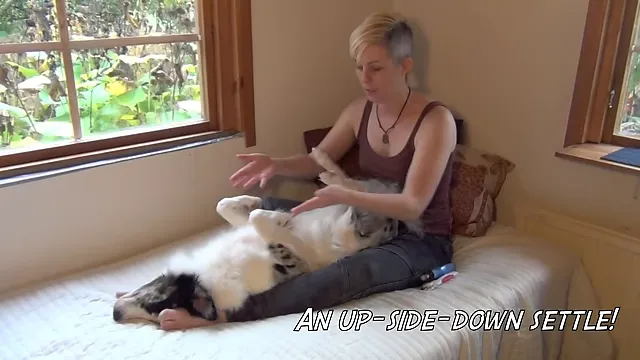
This is a trained behavior, not a position to force a worried dog into. The relaxed handling comes first. With positive reinforcement, nail trimming can become a genuinely enjoyable activity. Splash is so enthusiastic about it that persuading her we are finished can be the difficult part!
Do not have your dog roll onto their back immediately after a large meal.
Know Where the Quick Is Before You Trim
The quick is the pink part inside a light-colored nail that you must avoid cutting. I find that having my dog comfortably upside down makes it easier to examine the nail from underneath.
From that angle, look for the little horseshoe-shaped area. The hard edges on either side, where dirt can collect, are the areas I work on carefully with the grinder, while avoiding the quick.
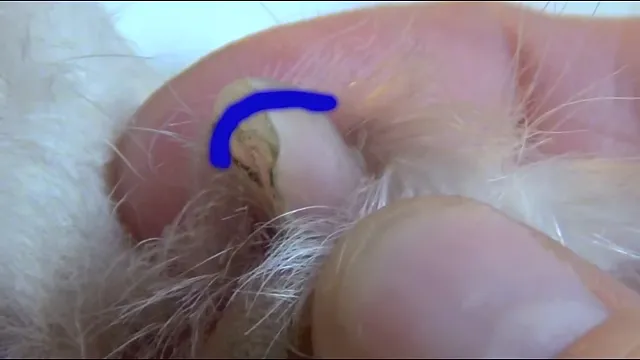
The aim is to remove excess nail, not to cut into the pink tissue. A shorter nail is only a good result if the trimming remains comfortable.
What if the quick has grown long?
When the quick extends far down the nail, you cannot simply cut the nail back to your desired length in one session. Instead, carefully shortening and shaping the surrounding excess nail over time can encourage the quick to recede, allowing the nail to become shorter gradually.
I prefer the Dremel for this detailed work because I feel more confident controlling how much nail I remove with it than with clippers. The priority is gradual progress while staying clear of the quick.
Using Clippers: Take Tiny Shavings
If you only have clippers, or your dog is still frightened of the Dremel, you can work in very small increments.
Rather than cutting off one large chunk, take tiny shavings of nail at a time. I have found that many dogs prefer this to a bigger cut, and it lets me approach the finished shape more gradually.
When I use both tools, the clippers do the initial work of removing excess length. Then I switch to the Dremel for shaping and smoothing.
How I Finish Dog Nails With a Dremel
After clipping off the excess, I work around the remaining nail in a consistent sequence:
- Support the paw securely. I find that a steady, firm hold helps reduce the ticklish sensation of the grinder.
- Sand the underside edges. I work on either side of the nail to remove the hard edges where dirt collects, keeping clear of the quick.
- Shape with strokes from bottom to top. I move the sanding drum along the nail rather than simply working straight into the tip.
- Check the finished shape. I look for a shorter, smooth nail without the rough edges left by clipping.
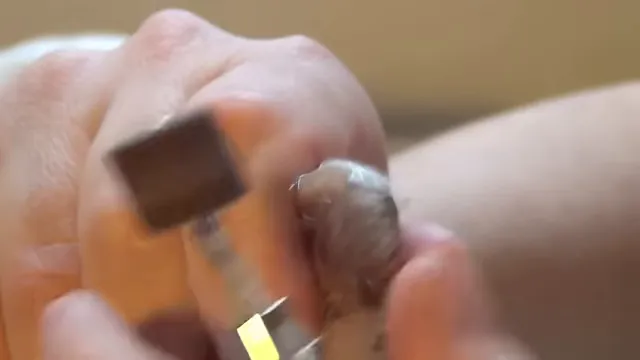
In my dogs, secure paw support and confident contact with the Dremel seem less ticklish than an unsteady approach. That is not a reason to force the process. The technique depends on a dog who has already learned to feel comfortable with the handling and the tool.
For an additional general reference on nail care and grooming, the ASPCA’s dog grooming tips provide supporting guidance.
Keep Comfort More Important Than Length
Avoid trimming your dog’s nails extremely short immediately before a competition or a large amount of exercise. Nail care should support comfortable movement, not leave your dog uncomfortable before an active day.
My routine brings together three things: regular maintenance, careful removal of small amounts of nail, and positive reinforcement. The goal is not just a neatly trimmed foot. It is a dog who feels relaxed about offering that foot again next week.


