In this double dog trick, one dog sits up with their front paws resting in your hands while a smaller dog jumps through the opening you create together. I originally taught this trick to Splash and Tug, and now I’m teaching it to Bliss, my Border Collie mix, and Epic, my Chihuahua.
The important part is that both dogs are actively participating. I don’t want to hold Bliss’s feet in place while Epic jumps through. I want him to choose to put his paws in my hands and keep them there.
As with most double dog tricks, the training starts with each dog separately. Once each dog understands their part, you can gradually put the behaviors together.
1. Teach Each Paw to Rest in Your Hand
For the dog who will help form the hoop, start with offering one front paw at a time. If this is a new behavior for your dog, my tutorial on teaching left and right paw on cue covers that foundation.
For this trick, simply touching your hand with a paw isn’t quite enough. You’re looking for duration: the dog places their paw in your open palm and leaves it there.
- Present your hand and cue one paw.
- Let the paw rest on your palm without gripping it.
- Reward your dog for keeping their paw there.
- Practice the same behavior with the other front paw.
Your hand is a place for the dog to rest their foot, not something that prevents them from taking it away. That distinction is the foundation of the whole trick.
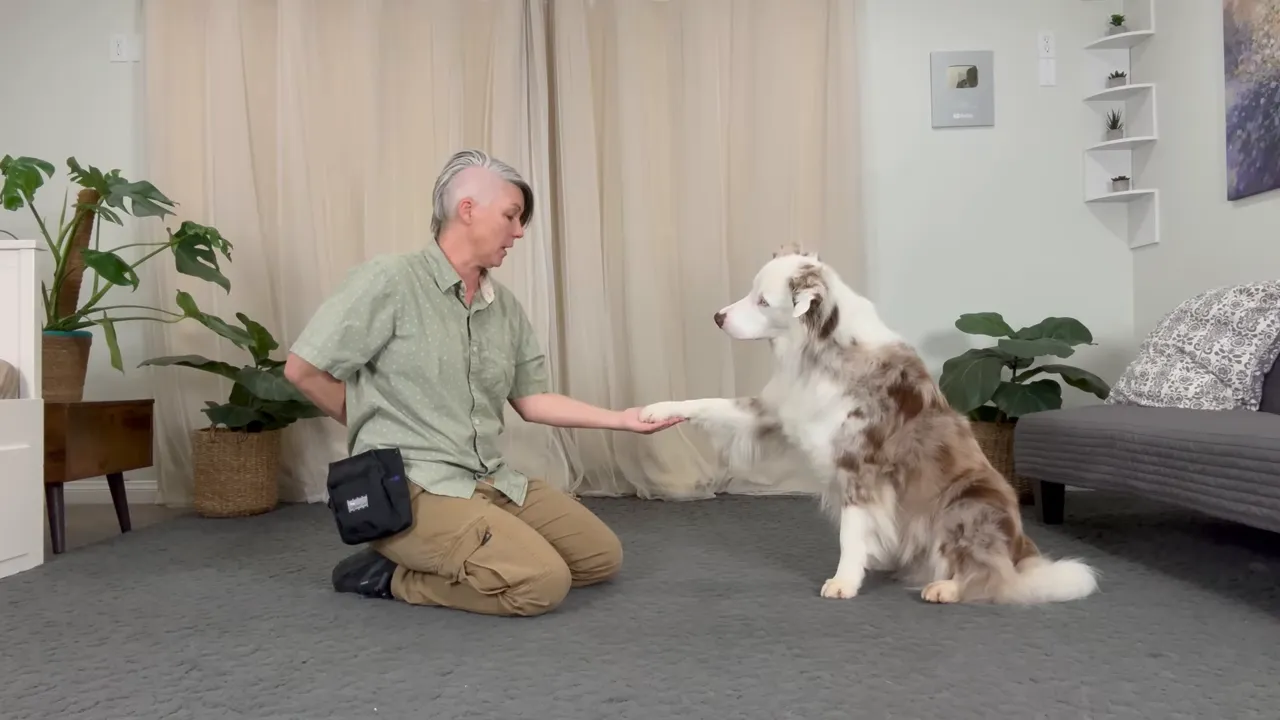
Once your dog is maintaining that contact, practice moving your hand up and down with their paw resting on it. Work on each side separately. This prepares your dog for the changes in hand position you’ll need when you make the opening for the smaller dog.
2. Build the Both-Paws Behavior
The next step is for your dog to place both front paws in your hands. A paws-up behavior is useful here, but I also like to include sit pretty so the dog is actively holding their sitting position rather than resting all their weight on my hands.
With Bliss, I cue sit pretty first, then cue both paws and offer my hands underneath his front feet.
Pay attention to the whole position, not just whether the paws reach your hands. I want Bliss sitting nicely and actively maintaining his balance. During one attempt, his rear foot comes out to the side, so I toss a treat away to reset him and then ask for the behavior again.
If the position isn’t what you’re looking for, there’s no need to keep working from it. Reset and give your dog another opportunity.
Let the hand position become the cue
Once the sequence is familiar, begin presenting your hands without first giving the sit-pretty cue. The goal is for that hand presentation to cue the dog to sit up and place both paws.
If your dog doesn’t remember what to do, you can go straight back to the familiar sequence: sit pretty, then both paws. Returning to the original cues is simply a way to help your dog succeed before trying the hand cue again.
3. Practice Opening the Hoop
Now practice changing the position of your hands while your dog keeps both paws resting on them.
After Bliss puts his paws in my hands, I move one hand higher and the other lower to create an opening between my arms and his front legs. That is the hoop Epic will eventually jump through.
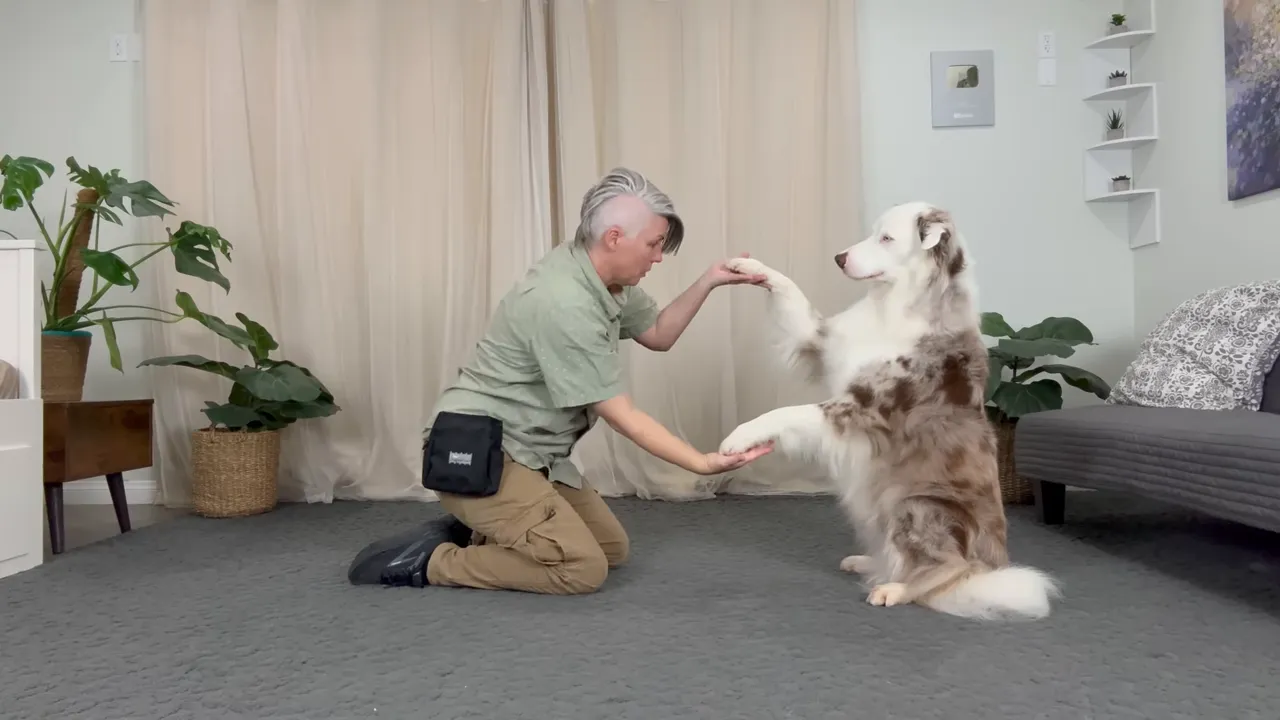
This is a point where your dog might take their paws off your hands. If that happens, go back a step. Practice the easier paw-resting behavior again, then return to opening the hoop when your dog is ready.
I really want Bliss to want his feet in my hands. Otherwise, this becomes a trick where I’m moving his feet around rather than a trick we’re doing together.
4. Teach the Smaller Dog to Jump Through Your Arms
The smaller dog also needs to learn their part independently. Before combining the dogs, teach a comfortable, familiar jump through your arms. My arm-hoop jumping tutorial explains that initial behavior.
Epic already knows how to jump through my arms, but we usually do it with the hoop positioned to my side. For this double dog trick, the opening is in front of me, so I practice that change with her first.
A behavior your dog knows in one position may need a little practice in a different position. I give Epic an opportunity to offer the jump, or I help her by using her familiar jump-through cue.
Then we practice jumping back and forth through the opening. That prepares her for the finished trick, where she’ll travel through in one direction and then return through the other way.
5. Bring the Dogs Together Gradually
When you first bring the dogs together, you don’t need to ask for the complete trick immediately.
I begin with Bliss sitting normally nearby while Epic jumps through my arms in front of him. I give treats to both dogs: Epic for jumping through, and Bliss while the little dog is moving close to him.
This gives Bliss a chance to experience Epic’s part before he also has to maintain his own paw position.
Then I start combining the behaviors:
- Cue Bliss to sit pretty and put both paws in my hands.
- Open the hoop.
- Cue Epic to jump through.
- Reward both dogs before setting up another attempt.
Keep in mind that this is a new version of the behavior for the dog forming the hoop. Keeping their paws in your hands while you work alone is different from doing it with another dog jumping through the space.
6. Return to Separate Practice Whenever You Need To
When Epic first jumps through, Bliss sometimes pulls his feet away. That’s perfectly fine. He’s learning to maintain a familiar behavior with a new movement happening right in front of him.
If I want to improve how steadily his paws stay on my hands, I can work with him alone again. I don’t need to hold his paws more firmly or keep repeating the complete trick when one part needs practice.
Use what happens in each attempt to decide what to practice next:
- Paws come off while you open the hoop: return to the paw-resting and hand-movement exercises.
- The hand cue isn’t clear yet: help with the familiar sit-pretty and both-paws cues.
- Paws come off when the smaller dog jumps: strengthen the hoop behavior separately before combining the dogs again.
- The smaller dog needs help with the new hoop position: return to jumping through your arms alone.
As the pieces come together, you can practice a jump in each direction, then a few back-and-forth jumps while the other dog maintains their position.
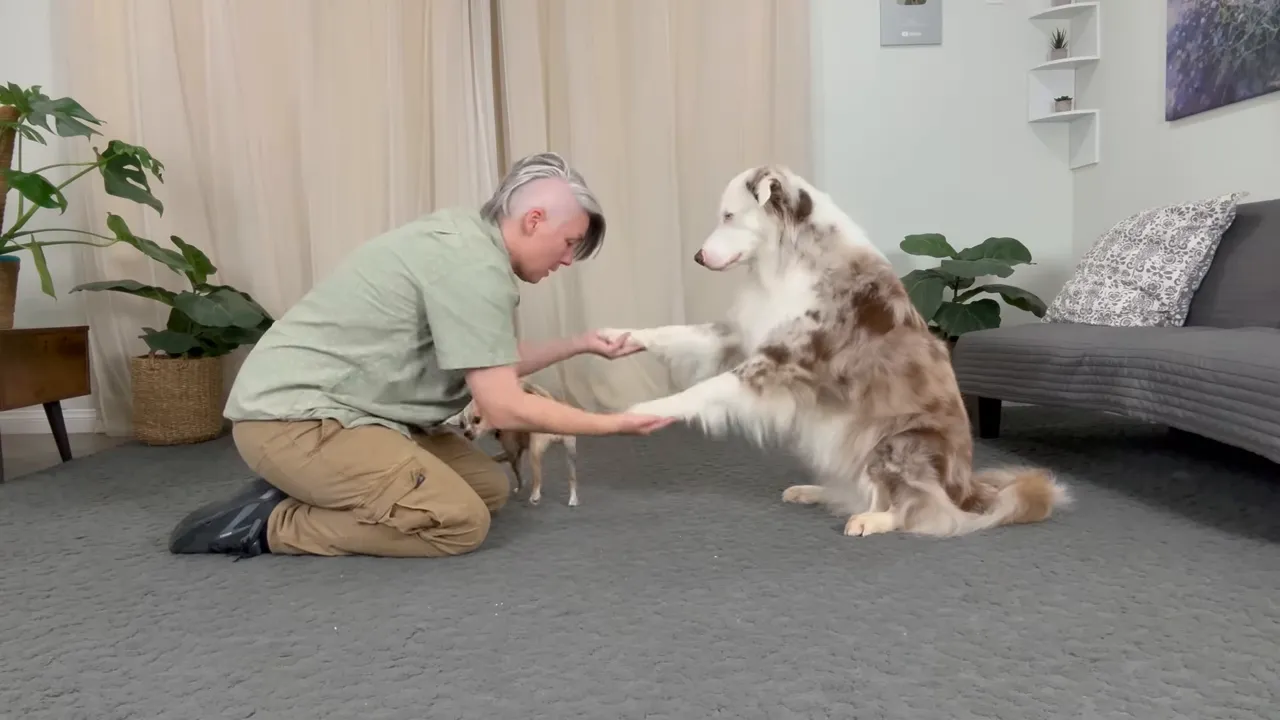
With Bliss and Epic, we finish after a lovely sequence of back-and-forth jumps. Good job, both dogs! That’s a nice place to stop.
The goal isn’t just to get the little dog through the opening. It’s to build a coordinated trick in which both dogs understand their part and choose to keep participating.


