Using food to lure your dog can be a lovely way to teach new movements, from spinning to going around you and weaving through your legs. But before working on the tricks, I suggest teaching your dog one important foundation: following the treat calmly is a behavior that earns reinforcement.
The goal is not to have your dog grabbing at your fingers or getting increasingly excited about the food. You’re looking for relaxed, confident movement as your dog follows you and your hand. A few small adjustments to your treats, distance, and reward placement can make that much clearer.
What You'll Learn
- Prepare appropriately sized, nonsticky treats so interruptions and licking do not complicate training.
- Use distance, reward placement, and lower-value food to encourage calm, confident following.
- Build circular movements and hand switches gradually before combining them into more complex tricks.
Prepare Your Treats Before You Start
Choose treats that are an appropriate size for your dog, and have them ready before training. If you’re stopping to break up treats, your dog might become frustrated or start offering other behaviors while waiting. Those extra behaviors can get mixed into what you’re trying to teach.
I also suggest choosing treats that are not too messy or sticky. Food that leaves residue on your fingers can encourage your dog to lick your hand rather than follow it.
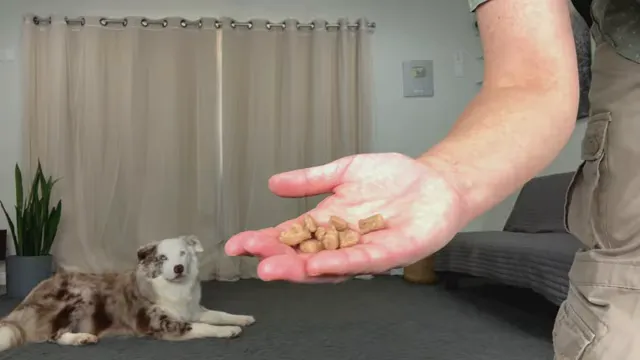
If you’re unsure about your options, my guide to what treats to use and why goes into more detail.
Start With Calm Following
To begin, put a treat on the ground for your dog to eat. Then move away and mark your dog’s calm movement as they follow you. A marker, such as the word good, identifies the moment you want to reinforce. Follow the marker by delivering a treat.
You can place that next treat on the ground and repeat. At this stage, you’re looking for a dog who is:
- Calm and relaxed around the food.
- Confident in their movement.
- Moving toward you and the treats without jumping or grabbing.
Once that is going well, start holding out your treat hand for your dog to follow. Keep the same focus on the quality of their movement, rather than trying to get a particular trick right away.
Adjust Distance and Treat Value if Your Dog Gets Excited
If your dog jumps toward the food, paws at your hand, or tries to lick the treat, create more distance. You don’t need to keep your hand right beside their mouth for them to begin learning this skill.
There are a few ways to make the setup easier:
- Move farther away. Mark your dog while there is still space between you.
- Feed on the ground. Place the reward away from your body so your dog does not need to crowd your hand to collect it.
- Hold the lure higher. Increasing the height of your treat hand is another way to create distance from your dog.
If the treats themselves are making your dog much too excited, try something lower value, such as their kibble or little pieces of carrot. Once your dog understands the game, you can introduce higher-value treats again.
The idea is to make it easier for your dog to succeed, not to keep practicing while they’re overwhelmed by the food. For more help with this foundation, see helping a dog become calmer around food.
Build Duration, Then Try a Spin
The next step is gradually increasing how long your dog can follow the lure before you mark and reinforce. You can also begin exploring different movements.
A spin is one of the behaviors I like to introduce early. Move your lure so your dog turns away from you and begins following a circular path. You might only get a small head turn at first, and that is a perfectly useful place to start.
- Present your treat hand for your dog to follow.
- Guide their head away from you to begin the turn.
- Mark the amount of turning they can comfortably offer.
- Reinforce, then gradually work toward more of the circle.
You can keep a couple of treats in your hand so you’re ready to reinforce those smaller pieces of movement.
Use a Prop if the Circle Is Difficult
If your dog is struggling to follow the lure in a circle, try putting a prop in the middle and guiding them around it. Choose something stable that will not fall over, and tall enough that your dog will not simply step across it. I suggest something higher than your dog’s shoulder.
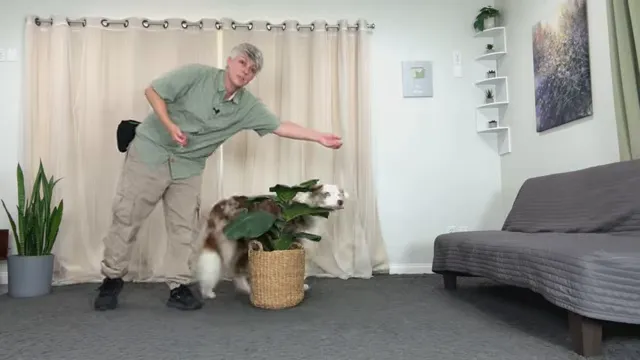
Mark your dog for following the lure. For a moving behavior like this, deliver the reward in the direction your dog is traveling. That lets the reinforcement support the movement you’re teaching.
Teach Your Dog to Follow Either Hand
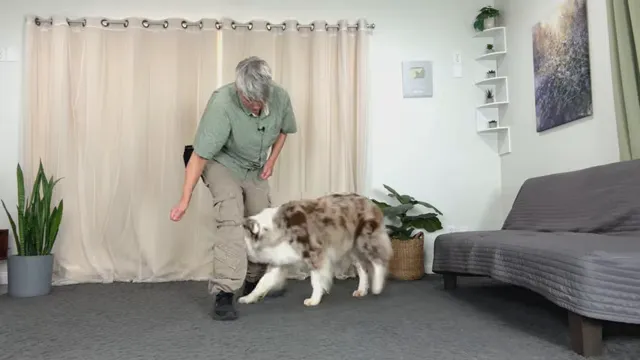
If you’d like to teach tricks, it is useful for your dog to learn how to switch from following one hand to following the other. This gives you a way to guide movements that continue around your body.
- Lure your dog with one hand.
- Make that hand disappear from their view.
- Present your other hand as the next target to follow.
- Mark as your dog switches to the new hand, then reinforce.
For example, when guiding your dog around you, you can start with your left hand, switch to your right, and then return to your left. In the opposite direction, you would use your right hand, then your left, then your right again.
As one hand disappears, your dog learns to keep moving and look for the next hand to follow. The same crossover skill is useful for leg weaving.
If Your Dog Takes Treats Hard
You can reinforce directly into your dog’s mouth when that works comfortably. But if your dog takes treats hard, or wants to lick and bite at your hand when it is close to their face, simply put the reward on the floor.
This allows you to continue practicing the following behavior without repeatedly bringing your fingers into that difficult position. You can also work separately on taking treats with a soft mouth.
Bring the Lure Closer Once Your Dog Understands
Once your dog is beginning to understand that following the treat is what earns it, you can start holding the lure closer to them before reinforcing.
That order matters. Start with enough space for calm, confident following, then bring the food closer as your dog understands the behavior. There is no need to begin with a treat pressed close to a dog who is trying to grab it.
These foundations give you a starting point for spins, circles around your body, and leg weaves. When you’re ready to move beyond a food lure, the next stage is removing the lure and adding a verbal cue. For now, keep the task clear: follow calmly, mark the successful movement, and reinforce where it helps your dog continue.


