If your dog’s behavior starts to get a little sloppy when you make an exercise harder, you don’t have to choose between making progress and keeping the behavior precise. You can work on the new challenge in some training sessions while returning to an easier setup in others to maintain accuracy and duration.
The important idea is this: you don’t have to work on every criterion at the same time. Changing the setup, maintaining precise movement, and increasing how long a behavior lasts can each be a separate training focus before you bring them together.
Notice What Changes When You Make the Exercise Harder
With my Chihuahua, Epic, I’m working on a bow from a down position. On a platform, her movement is very precise. But my goal is for her to perform that same behavior on the normal floor, without the platform.
When I remove the platform, the behavior changes a little. She may move her feet around or shuffle backward rather than keeping the movement as tidy as it was before.
In this example, the new criterion is performing the behavior on a different surface without the familiar platform. Although it’s still a bow from a down, the setup has changed, and she’s learning how to perform it under those new conditions.
If I move straight to practicing only on the carpet, the behavior could begin to vary as she works out what to do. That’s why I want to keep practicing the original, precise version as well.
Give Different Training Sessions Different Jobs
My plan is to use two kinds of sessions:
- Sessions for the new challenge: Practice the bow without the platform, focusing on transferring the behavior to the floor.
- Sessions for precision and duration: Return to the platform, where Epic can practice the movement she originally learned.
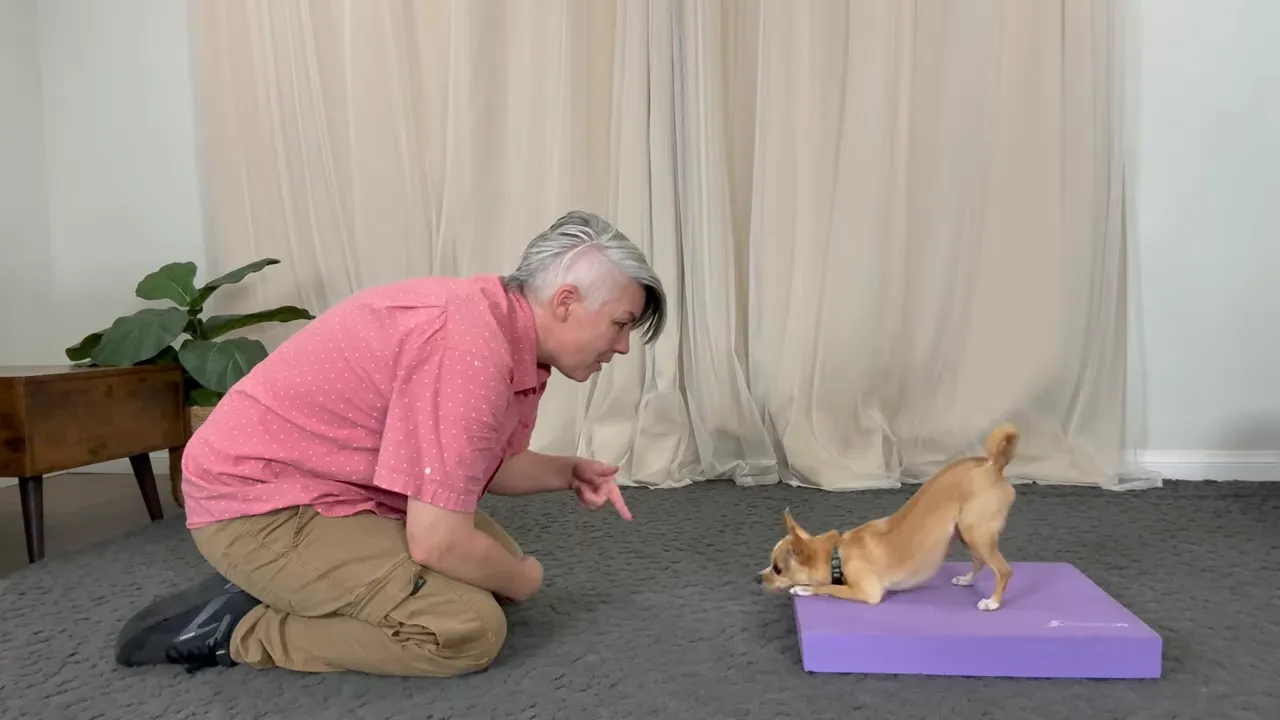
Going back to the platform gives me a way to maintain that familiar version while we’re working on something more difficult elsewhere. It isn’t abandoning the new goal. It’s keeping the original behavior in practice so that its details don’t get lost during the transition.
During the floor sessions, I’m reinforcing Epic very rapidly with lots of treats. Those sessions have a different emphasis from sessions devoted to holding a precise position for longer.
The eventual goal is to bring the pieces together: once she’s learning to perform the bow on the flat surface, I can start building precision and duration there too.
If you’d like the foundation for this particular trick, my bow-from-a-down tutorial using a platform covers how I teach it.
Apply the Same Idea to Heelwork
This approach isn’t limited to tricks. Suppose you’re working on heelwork and a new challenge means you’re giving treats much more frequently. You can still make time to maintain duration and precision in a setup where your dog already understands the exercise.
That might mean returning to practice inside your house, or revisiting the way you initially taught the movement, perhaps with a lure. Use that familiar setup to work on accuracy and sustained performance while separate sessions address the new challenge.
The point is to keep those established skills active rather than expecting every harder repetition to develop everything at once. For broader background on reward-based methods, the American Veterinary Society of Animal Behavior’s training guidance is a useful reference.
Use Smaller Steps Between the Old Setup and the New One
You can also make the transition itself more gradual. Instead of going directly from the platform to the carpet, I can put down a small mat that represents the familiar platform and see whether Epic can perform a more precise movement there.
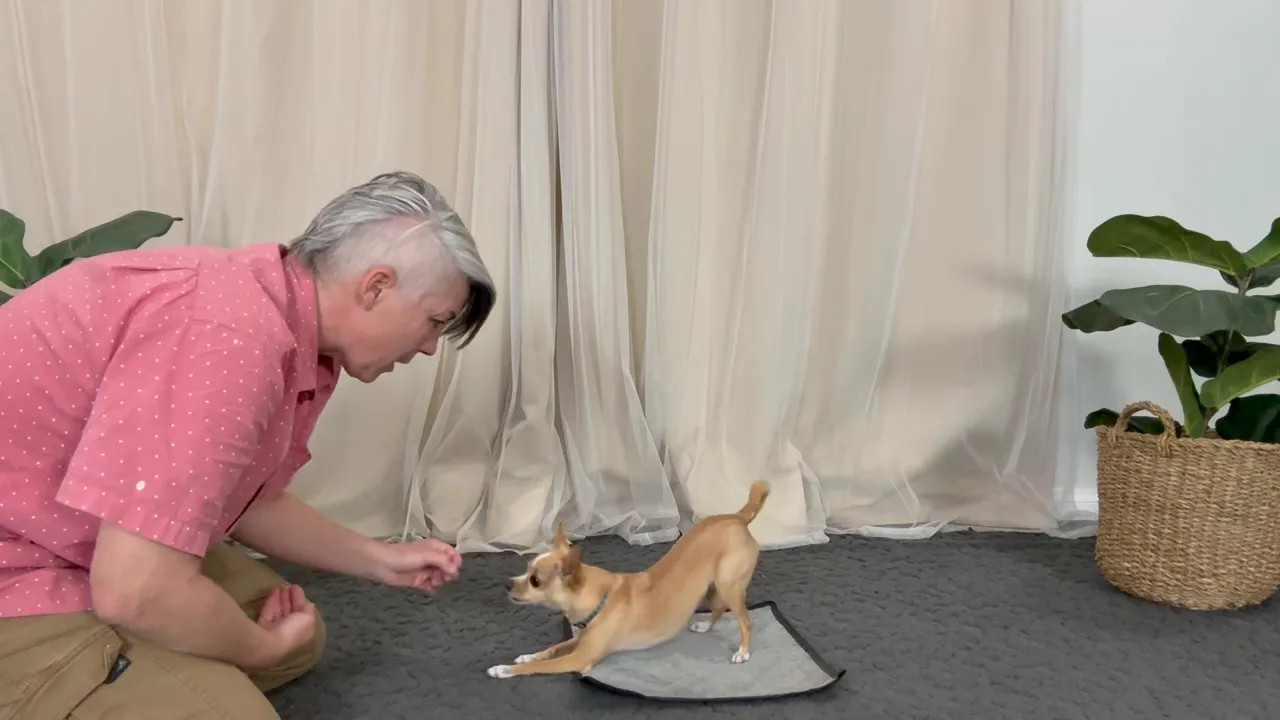
The mat gives us an intermediate step rather than making the whole change at once. I can assess whether that smaller change helps her keep the movement closer to the version I want.
When raising criteria affects the quality of a behavior, keep the precise version in your training plan, give the new challenge its own practice time, and look for smaller steps between the two. You can move toward a harder goal without leaving the original skills behind.


