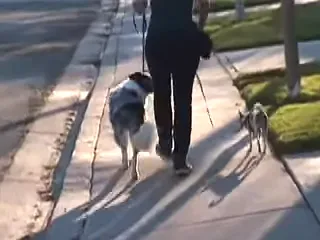
Loose leash walking means just that: walking with no tension in the leash. Your dog can look around, sniff, and enjoy the walk without dragging you along behind them. The goal is not to force your dog to stay beside you. It is to make being near you a wonderful place to be.
There are two important parts to teaching this: show your dog what you want them to do, and stop rewarding pulling with forward movement.
Why Pulling on Leash Keeps Happening
When your dog pulls toward something and you follow, pulling works. They get to move forward and reach the places they want to investigate. Even though you might not mean to train pulling, that forward movement is a big reward.
Pulling is uncomfortable for both ends of the leash. Tension on the neck or chest can also contribute to overarousal, making it harder for a dog to remain calm around other dogs and people. Teaching loose leash walking gives your dog practice controlling their impulses and moving with you in a more relaxed way.
That does not mean your dog needs to stare at you for the entire walk. A dog can be aware of you while still enjoying the surroundings. What matters is that the leash stays slack.
Start Somewhere Easy
Before heading down the street, practice indoors where there are few distractions. You want to build a strong foundation: being next to you is rewarding.
Practice in the house and then in your yard before asking for the same behavior on a walk. Your dog will have a much better chance of paying attention outside if they already understand the game.
You can use a clicker to mark the behavior you like, or a verbal marker such as “yes.” The marker tells your dog exactly which moment earned the treat.
- Hold the clicker in the same hand as the leash.
- Keep the treats in your other hand.
- Practice handling the leash, clicker, and treats without your dog attached first, so the equipment does not feel overwhelming.
Play the Catch-Up Game
This exercise teaches your dog that catching up with you and coming alongside you is worth doing.
- Drop a treat for your dog to eat.
- Walk ahead while your dog picks it up.
- Click as your dog catches up, before they reach you.
- Deliver the reward where you want your dog to be. Feed behind your leg or drop the treat just behind your heel.
The placement of the treat is important. Rather than feeding out in front and encouraging your dog to forge ahead, you are reinforcing a position beside or slightly behind you.
Repeat the game so your dog gets plenty of opportunities to discover that coming back toward you pays.
What to Do When Your Dog Pulls
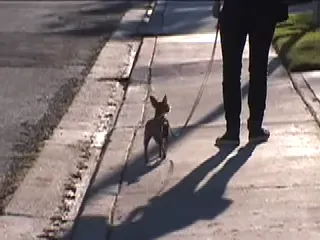
If your dog moves ahead and the leash becomes tight, do not keep following. Instead, use one of these ways to reset.
Stop and Encourage Your Dog Back
- Stop when the leash becomes tense.
- Encourage your dog toward you by patting your leg or making a kissy noise.
- Take a couple of steps backward.
- Once the leash is loose again, continue forward.
If your dog pulls again, repeat the process. The important distinction is that a loose leash allows forward movement; pulling does not.
Turn and Go the Other Way
Another option is to change direction when the leash becomes tense. Turn around and encourage your dog to come along with you rather than continuing toward whatever they were pulling to reach.
These are changes in your own movement, not leash corrections. Avoid jerking, startling, or hurting your dog. The aim is to teach a comfortable walking behavior, not add stress to the walk. For supporting guidance on reward-based training, see the American Veterinary Society of Animal Behavior’s position statements.
Reward the Walking You Like, Including Stops
It is easy to notice pulling and forget to acknowledge all the moments when your dog is doing exactly what you want. Click and reward good walking while it is happening. Do not wait until your dog makes a mistake to interact with them.
Also practice stopping. When you stop and your dog stays with you, click and reward. If your dog rushes ahead, do not click that attempt. You are teaching your dog to stay connected to your movement, including when the movement ends.
Change the Route to Change the Habit
If your usual walk is a route where your dog habitually pulls, set that route aside during practice. Instead, walk back and forth in front of your house.
This simple change helps in two ways:
- Your direction becomes less predictable, giving your dog a reason to pay attention to where you are going.
- There is no longer one obvious “forward” direction for your dog to keep pulling toward.
Combine these direction changes with rewards for walking near you. You are not simply preventing your dog from reaching the end of the leash. You are building a reason for them to choose to stay close.
Build Connection Without Giving Up Safety
The lovely thing about reward-based loose leash training is that your dog can learn to enjoy staying with you rather than being held in position by the leash. That connection can be useful if you accidentally fumble or drop it, but do not deliberately drop the leash near roads or other hazards to test the training.
Even a well-trained dog can be frightened by an unexpected sound and run into danger. Keep the leash secure in places where it is needed. Off-leash practice belongs in safe locations where dogs are permitted to be off leash.
Make being beside you rewarding, stop letting pulling provide access to the next interesting place, and give your dog plenty of easy practice. The goal is a relaxed walk you can both enjoy.


