Puppies use their mouths to explore and interact with their environment. It is normal for a puppy to grab at hands, clothes, or moving feet, but that does not mean we want them to practice doing it.
The starting point is the same as for any unwanted behavior: teach your puppy what you would like them to do instead. Rather than waiting for biting and reacting to it, set up easy training games in which your puppy can learn to sit, lie down, stand, or walk calmly without putting their teeth on you.
There are two parts to this process: reinforcing an alternative behavior during planned training, and preventing biting from remaining rewarding in everyday life.
Key Takeaways
- Teach calm alternatives to mouthing before practicing situations that usually trigger biting.
- Start with small movements and make exercises easier whenever your puppy begins grabbing.
- Keep handling rewarding, and always allow your puppy to move away.
- Prevent everyday biting from continuing through redirection, barriers, and planning for predictable triggers.
Start With a Reaching Hand
Begin with the least exciting version of something that normally makes your puppy mouth you. For many puppies, that is simply a hand reaching toward them.
- Start when your puppy is calm. Have your treats ready and keep your movements slow.
- Reach a little toward your puppy. Make the movement small enough that they can remain relaxed without grabbing your hand.
- Mark the behavior you want. Click or say “yes” as your puppy remains calm with their mouth off your hand, then feed a treat.
- Repeat at an easy level. Your reaching hand should begin to predict a treat rather than an opportunity to bite.
- Gradually add difficulty. Progress from reaching to brief touching and then gentle petting as your puppy becomes successful.
You do not need to insist on one particular position. Standing quietly is just as useful as sitting or lying down. The important part is that your puppy is interacting calmly without mouthing.
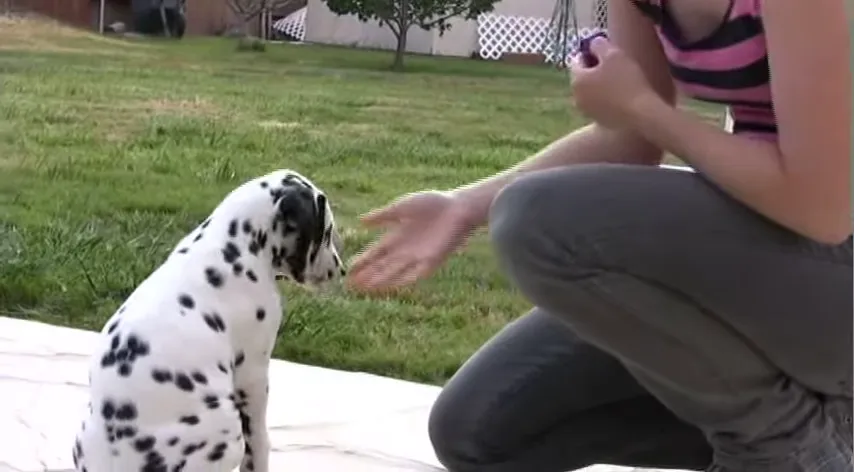
Go slowly. A hand reaching toward the puppy, touching their shoulder, or stroking their side should not automatically become an invitation to wrestle.
If your puppy is sensitive to the sound of a clicker, do not make handling unpleasant by pairing touch with a noise they find startling. Use a quiet verbal marker instead.
Progress to Moving Feet, Shoes, and Other Exciting Situations
Once an easy reaching hand is going well, apply the same process to other things your puppy wants to bite.
For example, if your puppy chases shoes, start with a small movement of one foot. Mark and reinforce your puppy for standing calmly without grabbing it. Gradually build toward taking steps near the puppy and walking past them.
The goal is not to provoke a bite and then correct it. The goal is to make the situation easy enough that your puppy can practice the response you want.
If a bigger step makes your puppy grab your shoe, that is useful information: the exercise became too difficult. Go back to a smaller movement, such as moving one foot slightly in front of them.
What if the training game makes your puppy more excited?
If your puppy becomes increasingly wound up, stop and try again later when they are calmer. You can also use a less exciting food reward if the food itself is contributing to the excitement.
Keep both parts of the exercise manageable: what you are doing around the puppy and how exciting the reinforcement is. More enthusiastic movement and more exciting treats are not always better.
Teach Your Puppy That Handling Can Be Calm and Rewarding
Handling exercises are about more than keeping teeth off hands. You are also helping your puppy learn how to feel about being touched.
When gentle touch consistently predicts something pleasant, handling can become calming rather than a signal to start biting and playing. That positive history may also make familiar, welcome touch useful for reassuring your dog in exciting or worrying situations later in life.
But the touch needs to be rewarding for your dog, not just enjoyable for the person doing the petting.
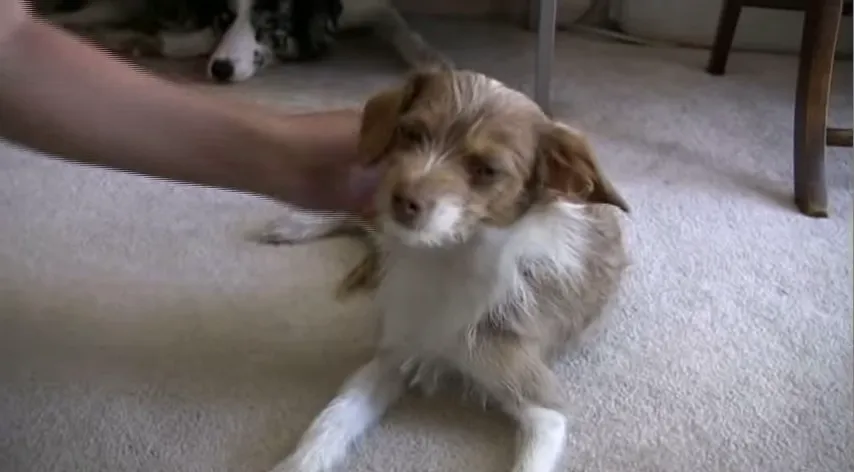
Respect your puppy’s comfort, and stop guests from petting them in invasive, rough, or overly exciting ways. Training a dog to cope with handling is not permission for people to manhandle them.
Prepare for grooming and veterinary care
Practice handling regularly, building from easy touch toward the kinds of contact your puppy will encounter during grooming and veterinary visits. Examples include:
- Touching and gently handling paws.
- Gently handling ears.
- Briefly lifting a lip to look at the teeth.
- Touching different areas of the body.
Pair these small handling actions with treats, and increase the difficulty gradually. Do not jump straight from an easy shoulder touch to something your puppy finds uncomfortable.
You can also prepare your puppy, through carefully controlled training games, for some of the less predictable movements people might make. This does not mean poking sensitive areas or deliberately frightening the puppy. Keep the exercises gentle and within their comfort level.
If someone is too rough with your dog in everyday life, get your dog out of the stressful situation. Preparation is not a reason to ask them to endure it.
Keep Training Safe and Give Your Puppy a Choice
A few setup rules make these exercises clearer and safer for everyone.
- Adults should run the exercises. Children can unintentionally make mouthing more exciting and teach the puppy that biting is a fun game.
- Control any practice involving a child. If a child is present as a distraction, an adult should hold the puppy’s leash and manage every interaction. End the exercise if excitement rises.
- Be especially cautious with children under five. Never leave them alone with a dog or encourage them to initiate petting or handling. Young children may struggle to control how rough they are, which can be unsafe and can make the dog uncomfortable around children.
- Plan a way to step out of reach. A leash or a safely secured, supervised tether can allow you to move away if you accidentally make an exercise too exciting.
- Always allow your puppy to back away from handling. Do not corner them or use the leash to force them to remain within reach.
Feeling trapped or forced can turn a handling exercise into a stressful experience. We do not want a puppy learning to bite because that is their only way to make contact stop.
If mouthing begins during a training game, make the next repetition easier. For an adolescent or adult dog who mouths during touch, consider handling discomfort or shyness rather than assuming it is simply puppy-style play.
Keep Rough Play Structured and Teeth on Toys
If you choose to play an energetic game with your puppy, give them a clear, appropriate target for their teeth. One option is to hold a toy in each hand so the puppy has toys to bite rather than your skin.
Keep the rules consistent:
- Use a cue to begin the game.
- Keep biting directed toward the toys, not your hands.
- If teeth touch skin, the game ends.
- Use a cue to finish the game.
- Do not reward your puppy for starting the game by grabbing or biting you.
Structured play gives your puppy an outlet without teaching them that human hands are play objects.
What to Do When Your Puppy Bites Outside Training
Every time biting produces something rewarding, your puppy gets more practice at a behavior we want to reduce. That reward might be interaction, exciting movement, or the sensation of biting itself.
This is why simply ignoring the puppy while allowing them to continue chewing on you is not a good plan. Removing attention is useful only if you also prevent the biting from continuing.
Choose a response that helps your particular puppy become calmer, rather than one that adds excitement.
Interrupt and redirect
Call your puppy away from the person they are biting, then direct them toward a toy or another appropriate activity.
A puppy-like yelp may interrupt some puppies, but it can have the opposite effect on others and encourage more biting. If a sound makes your puppy more excited, it is not helping.
Withdraw your attention and access to your hands
Stand up and move your hands out of reach. Resume the interaction when your puppy is calm.
If they keep pursuing you, step behind a baby gate so they cannot continue biting. This is different from standing still while the puppy hangs on to your clothes: you are actually interrupting their access to the activity.
Use calm handling only when it is genuinely calming
For a puppy who is comfortable being picked up and held, calmly supporting them in a position where their teeth cannot reach your skin may help interrupt the episode. Keep your own behavior quiet and nonthreatening; gentle blinking or yawning may help keep the interaction low-key.
This must never become a struggle, a threat, or a way to frighten the puppy into stopping. The purpose is to preserve trust and make necessary restraint feel safe and rewarding. If holding makes your puppy worried or more aroused, choose a barrier or redirection instead.
Prevent Predictable Biting Before It Starts
If biting happens in the same situation repeatedly, turn that situation into a planned training exercise rather than waiting for the next incident.
For example, if your puppy bites your feet as you approach or climb the stairs, begin reinforcing before the first bite. Mark and treat as you approach, then continue reinforcing calm movement without grabbing as you go up.
The same principle applies to a predictable evening “witching hour.” Offer an appropriate chew or arrange a walk before that period begins, rather than waiting until your puppy is already wildly biting and trying to work through it.
Prevention is not avoiding training. It creates opportunities for your puppy to practice something more useful.
Build Calm Behavior Without Punishing Biting
You do not need to add something frightening or unpleasant to stop puppy mouthing. Punishment can increase arousal, which is the opposite of what we are trying to achieve. For supporting guidance on reward-based methods, see the American Veterinary Society of Animal Behavior’s position statements.
Instead, remove the opportunity for biting to continue paying off while teaching an alternative response. Reinforce calm handling, quiet standing, relaxed sitting, and settling so your puppy has useful behaviors to choose when something exciting happens.
Do not make the whole training plan about stopping teeth. Spend time teaching your puppy how to be calm around hands, movement, and everyday interactions. Those skills help them cope with excitement and make better choices.


