A new environment can be so exciting that your dog starts pulling on leash or moving farther ahead without noticing what you are doing. One of my favorite ways to reconnect is a simple relationship-building game: stop when you stop.
The idea is to make paying attention to your movement reinforcing for your dog. You teach the game at home first, then use it for short moments on walks when your dog gets distracted. Outside, opportunities to move forward, sniff, and explore can become part of the reinforcement, too.
This is not about keeping your dog focused on you for the entire walk. It is a little game to help you connect, then get back to exploring together.
Teach the Stop When You Stop Game at Home
1. Reinforce the position you want
Start by deciding where you would like your dog to be when you stop. For leash walking in a city, that might be standing close to your side. For off-leash walking, you might be happy with your dog somewhere within a slightly larger area near you.
While you stand still, reinforce your dog in that position. If you want your dog beside you, deliver treats there while they remain stationary, rather than shuffling around or moving across the front of your legs.
You are teaching a default position before adding movement. This foundation is useful for other leash walking exercises as well, because your dog learns where being near you pays off.
2. Take one step and feed as you stop
Next, take a step forward with your dog and stop. At first, deliver the treat as you stop so that it is very easy for your dog to succeed.
- Begin with your dog in the position you have been reinforcing.
- Take one step forward.
- Stop and feed your dog at your side.
- Give additional treats for remaining there before moving again.
After a little practice, your dog should begin to anticipate the pattern: moving with you and stopping beside you leads to reinforcement. There is no need to rush into walking long distances. That little step gives your dog a clear, achievable starting point.
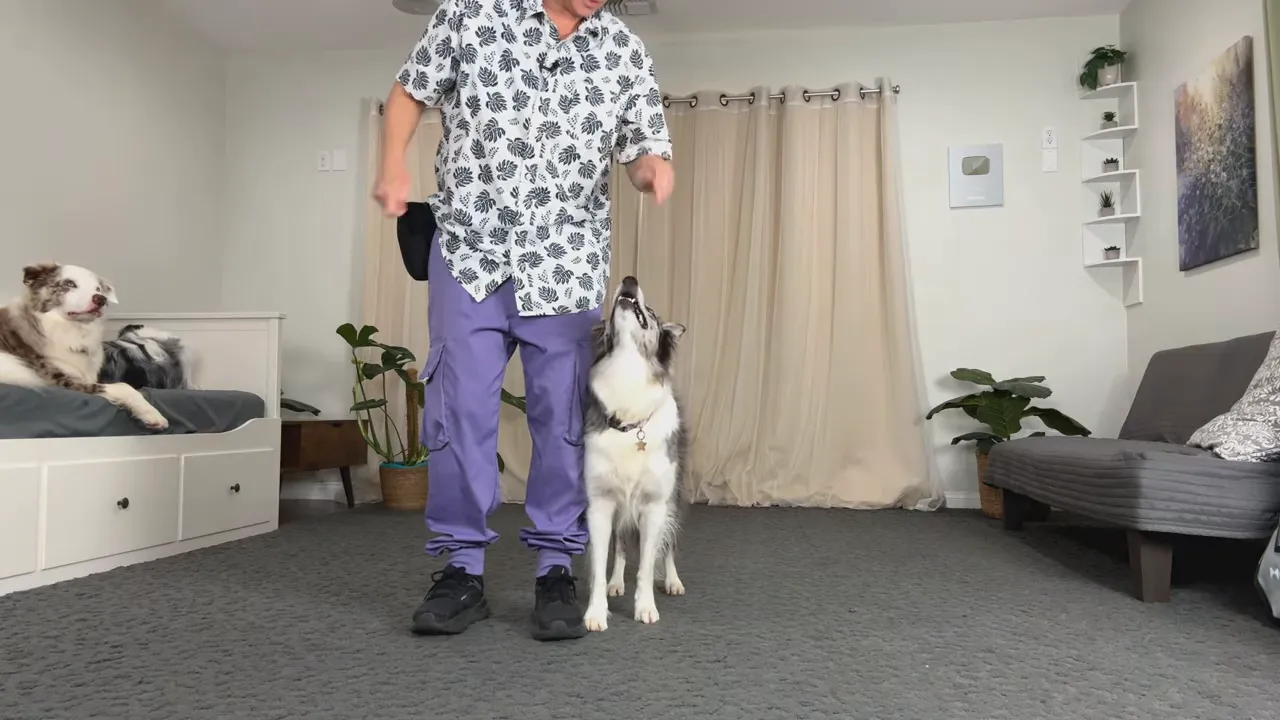
3. Let your dog offer the stop
Once your dog has had some practice, see whether they will stop with you without needing the food delivered as you come to a halt. Take a step, stop, and mark the moment your dog anticipates stopping with you. I use a short marker such as “good,” then deliver the treat at my side.
If your dog has not noticed the pattern yet, simply repeat the easier version a little more.
I like to hold the treats behind my back during this stage. That way, the dog is learning to respond to my movement rather than just following visible food. Otherwise, stopping on a walk without a treat held near their nose might look like a completely different exercise.
Food can still follow the behavior without being visible beforehand. As your dog understands the game, practice walking normally, with no treats in the hand beside them.
4. Make the next repetition easier if your dog gets ahead
If your dog stops a little ahead of you, you can still mark that stop and deliver the reinforcement back at your side.
On the next repetition, take a smaller step and feed before your dog moves out ahead. This helps remind them where you would like them to stop, while keeping the exercise easy.
Build toward being able to walk around at home and stop several times, with your dog engaged and responding to your movement. That is the foundation you want before taking the game out on walks.
Let Your Movement Be the Cue to Stop
For this particular game, I do not give a verbal cue for stopping. I want my dog to notice when my movement stops and respond to that.
I may say “let’s go” to mean that we are moving together again, but even that is optional. You can use your body movement to start walking, too.
For a blind dog, you can adapt the game by using verbal cues for both moving and stopping. The goal is still the same: a clear, reinforcing way to move together.
Practice Separately Before Adding More Dogs
If you walk more than one dog, teach each dog the game individually first. Then practice with the dogs together indoors before trying it outside. This can save you so much frustration.
When you bring the dogs together, go back to the first step. Reinforce each dog in the position you want them to occupy while everyone is standing still. Having other dogs beside you changes the setup, so give them a chance to learn that new arrangement before adding movement.
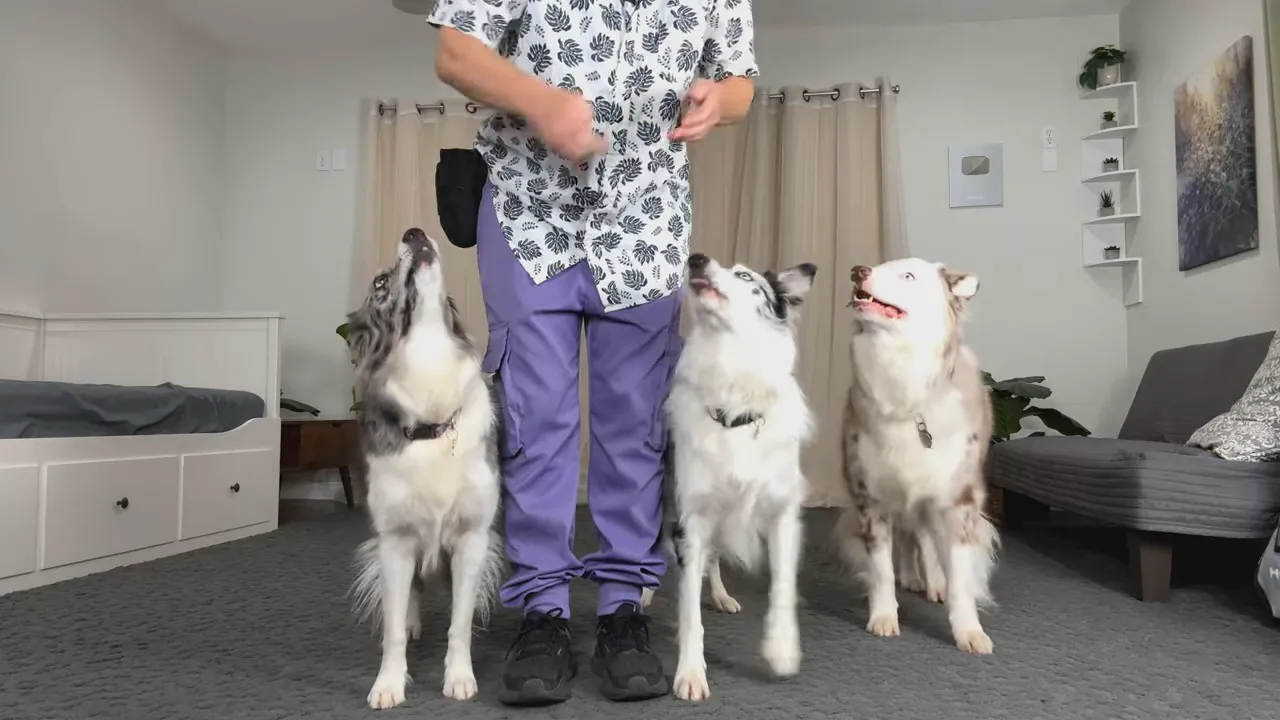
Once the dogs are comfortable in their positions, return to small steps and reinforced stops, just as you did when teaching them separately.
Use the Game Briefly, Then Return to Sniffing
Once your dog knows the game at home, you can use it when an exciting environment starts to draw their attention away from you. That might be a moment when they begin pulling on leash, or when they are getting farther ahead on a trail and paying less attention to your movement.
Play for about 30 seconds to one minute, using a few starts and stops to reconnect. In everyday situations, moving forward and having another opportunity to explore can reinforce that connection.
The important thing is not to turn the whole walk into this exercise. Walks should be about letting your dog sniff and explore. For more on that balance, my sniffy walks video explains that approach.
Think of this as a brief, enjoyable check-in: notice one another, move together, and then carry on with the walk.


