Your puppy or adult dog sleeps beautifully in a pen or crate. But as soon as you let them loose in the house, relaxing seems to be the last thing on their mind. Sometimes, the longer they are out, the more excited they become.
This can feel frustrating, especially when it seems as though you have to close your dog away for them to get enough rest. But settling outside the pen or crate is something you can teach. The aim is to help your dog discover that being loose in the house includes the option to lie down, relax, and take a nap.
That does not mean a puppy should never play indoors. Play is perfectly normal! The concern is when your puppy or dog never thinks to rest and becomes increasingly overexcited or frantic whenever they have freedom.
Key Takeaways
- Give your dog everyday choices so freedom outside the pen becomes less exciting.
- Reinforce relaxation in the pen, then progress to settling with the door open.
- Keep bed training calm and separate from energetic obedience or sport exercises.
- Use supervised household freedom to teach both appropriate behavior and ordinary, quiet downtime.
Make Everyday Choices Less Exciting
For a dog who becomes frantic when let loose, I would begin by looking at how much choice they have during the rest of their day.
If your dog spends alone time in a pen, gradually increasing the pen’s size can give them more room and more options. Instead of freedom being something that only happens when you let them out, they can already make small choices within their familiar space.
This is particularly relevant if you need to go to work. Even with a pet sitter coming to provide bathroom breaks, your puppy or adult dog may still spend time alone. Having room to move, change resting places, and choose what to do can help make the transition out of confinement less exciting.
Why I Prefer a Pen for Leaving a Puppy
One reason I like a pen rather than a crate for leaving a puppy is that a growing puppy needs opportunities to move. Think of a toddler who alternates between doing things and taking naps. I want a puppy to have opportunities for that kind of natural movement and choice, too.
A pen can also offer different resting surfaces. Your dog might choose a soft bed for a while, then move onto a cool, hard floor. Those are small choices, but they matter.
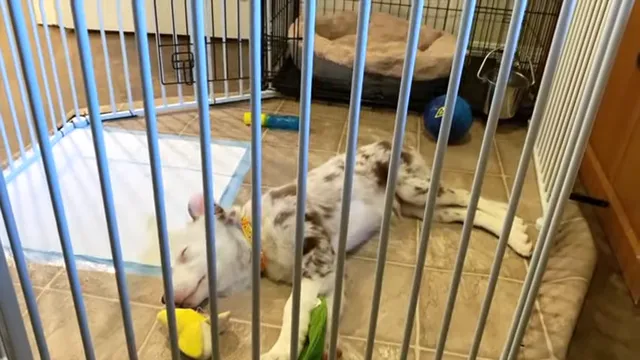
If the only options during confinement are standing up and turning around, everything available outside that space can become tremendously exciting. Giving your dog more choices during alone time can help them feel more fulfilled and calmer when they come out.
Offer Choices on Walks, Too
Choice does not have to happen only inside the house. Try short, sniff-focused walks where your dog has opportunities to explore and make choices. You can take little walks, come back inside, and notice whether settling is easier afterward.
Rather than responding to every restless moment with more toys, tricks, treats, and exciting interaction, make room for a different lesson: we can simply spend time together without doing anything exciting.
Start Teaching Relaxation Where Your Dog Already Settles
If your dog already relaxes in a pen, you have a useful starting point. You do not need to begin in the most difficult situation, with your dog loose throughout the house.
Build from the place where relaxation already happens:
- Reinforce relaxation in the pen. Spend time in the same room. When your dog chooses to relax, calmly go over and give them a treat. Then indicate that you have no more treats and walk away.
- Open the pen and sit inside it. When your puppy or adult dog relaxes there with you, reinforce that choice.
- Sit outside the open pen. Reinforce your dog for choosing to go back into the pen and relax.
The important change is that the pen becomes somewhere your dog can choose to rest, not only somewhere they settle because the door is closed.
When they are loose and begin to feel sleepy, they can return to that familiar resting place. Leaving the pen or crate available gives them a way to make that choice.
For a dog who never seems to settle outside confinement, begin with multiple training sessions reinforcing relaxation in the pen before expanding the lesson into other parts of the house.
Build a Calm History With Beds Around the House
Once you have a starting point, you can take the bed from the pen or crate and use it elsewhere. You can also provide multiple beds around the house.
At first, you might simply reinforce the behavior of choosing to go to a bed and lie down. You are not forcing your dog to stay there. You are building a history of good things happening when they choose that resting place.
Keep this practice calm. I would not turn it into a fast game of racing to the bed, dropping into a down, jumping up, and running back for another repetition. That may be a fun training exercise, but it is not the feeling we are trying to create around a place for settling.
Instead, practice a quiet, relaxed down on the beds where you would like your dog to rest.
If you also train obedience or dog sports, keep an energetic send-out-and-down behavior separate. I use completely different cues for those behaviors with my dogs, and I usually practice them outside rather than in the house.
For Less Extreme Cases, Allow More Quiet Time Loose
Not every dog needs the full progression from inside the pen. If your dog is not frantic when loose, you can gradually increase the amount of supervised time they spend out, while keeping the crate or pen accessible for naps.
Give them opportunities to explore, make choices, and eventually feel ready to rest. The important distinction is that this is quiet time in the house, not an endless sequence of activities you provide.
You can also help by spending time near a spot your dog already finds comfortable. Perhaps that is beside their dog bed, or perhaps they prefer the cool tiles by the fireplace.
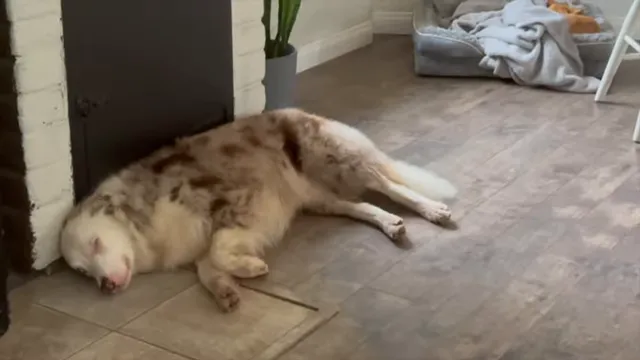
Sit there with a book. Or, if your dog enjoys it, give them a calm massage in that location. You are helping them discover that they can relax there while you are nearby.
If being loose makes your dog increasingly frantic rather than more settled, start with the smaller steps around the pen instead of relying on more time out alone.
Help a New Puppy or Dog Learn About the House
If you are about to bring home a puppy or adult dog, I suggest spending plenty of time together in different rooms during the first three days. Help them learn how to interact with the environment, rather than making the house a place they only occasionally get to explore.
This does not mean giving a new puppy unsupervised freedom. Supervise closely whenever your puppy is loose so you can work on house training and guide appropriate choices.
Alongside settling, teach everyday household behaviors such as leaving furniture alone and not counter surfing. You can work on these skills in training lessons, then help your puppy use them during supervised time out.
If you notice your puppy heading toward something you do not want them to do, you can gently get their attention with a kissy sound or a cheerful “pup, pup, pup,” then redirect them toward an appropriate toy.
Also include time when nothing much happens. Your dog needs the opportunity to discover that being in the house is ordinary, not always a special event filled with interaction and excitement.
The Goal Is Relaxation With More Freedom
Ultimately, I want the house to become as familiar and restful as the pen. Your dog can still play, move around, and interact with you, but they can also choose to stop and rest.
Behavior can change. A puppy or adult dog who currently settles only behind a closed pen or crate door can learn to be calm elsewhere, too.
Start where relaxation is already easy, reinforce those quiet choices, and gradually help your dog carry that experience into the rest of the house. The wonderful part is not just a calmer home. It is that your dog gains more choices about how to spend their day.


