Before you recycle those plastic fruit and vegetable containers, you can use them for a simple “leave it” game. Put food inside, and you have a distraction your dog can practice walking past without being able to scoop it up quite so quickly.
This is a useful step between learning the cue and leaving exposed food on the floor. The container makes the food harder to access while you reinforce your dog for passing it by.
Your dog should already understand “leave it” before starting this exercise. If you need to teach the cue first, start with my complete leave it tutorial.
Set Up a Distraction Your Dog Can Handle
A plastic produce container can work well for this game, but think about how your dog responds to food. If your dog gets very excited, start on leash and stay far enough away that they cannot reach the distraction.
You can also use a more durable container, such as a sturdy food storage container or a thick glass dish with the food inside. The container is there to help manage access, not to become something your dog grabs or chews.
Make the food distraction easy to leave, and make the reinforcement worthwhile. For a dog who finds almost every food exciting, a carrot or some raw broccoli inside the container might be a good starting point. Choose something your dog finds less interesting than the food you will deliver for leaving it.
Food value depends on the individual dog. My dog Bliss is a big foodie, and he likes kibble just as much as turkey. That means kibble can work as reinforcement for him in this exercise. You do not necessarily need a special treat, but you do need something your dog is happy to work for.
Practice Walking Past the Container
- Put the food inside the container and place it on the floor.
- Walk your dog past at a distance they can manage, using a leash to keep the food out of reach if needed.
- Give your familiar “leave it” cue and reinforce your dog for not moving toward the container.
- Mark the successful response with “good,” then deliver the reinforcement yourself.
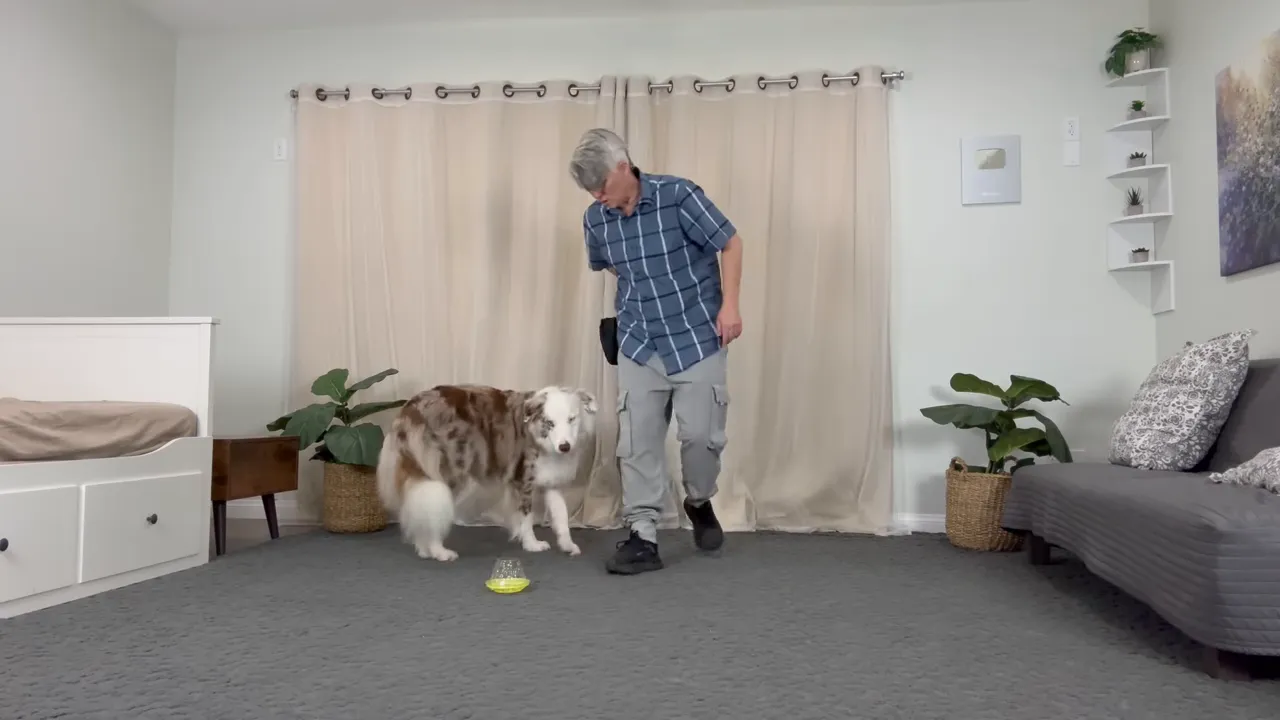
If your dog starts looking toward the container, you can use the cue and reinforce them for leaving it. If they move in to sniff, cue “leave it” and reward their response.
The eventual goal is not simply a dog who keeps returning to investigate and then turns away when asked. You are working toward passing the distraction without your dog needing to look at it at all.
Progress From a Container to a Plate
Once your dog is doing really well with the container, swap it for a plate. This makes the food more accessible, so wait until the previous setup is going well before changing it.
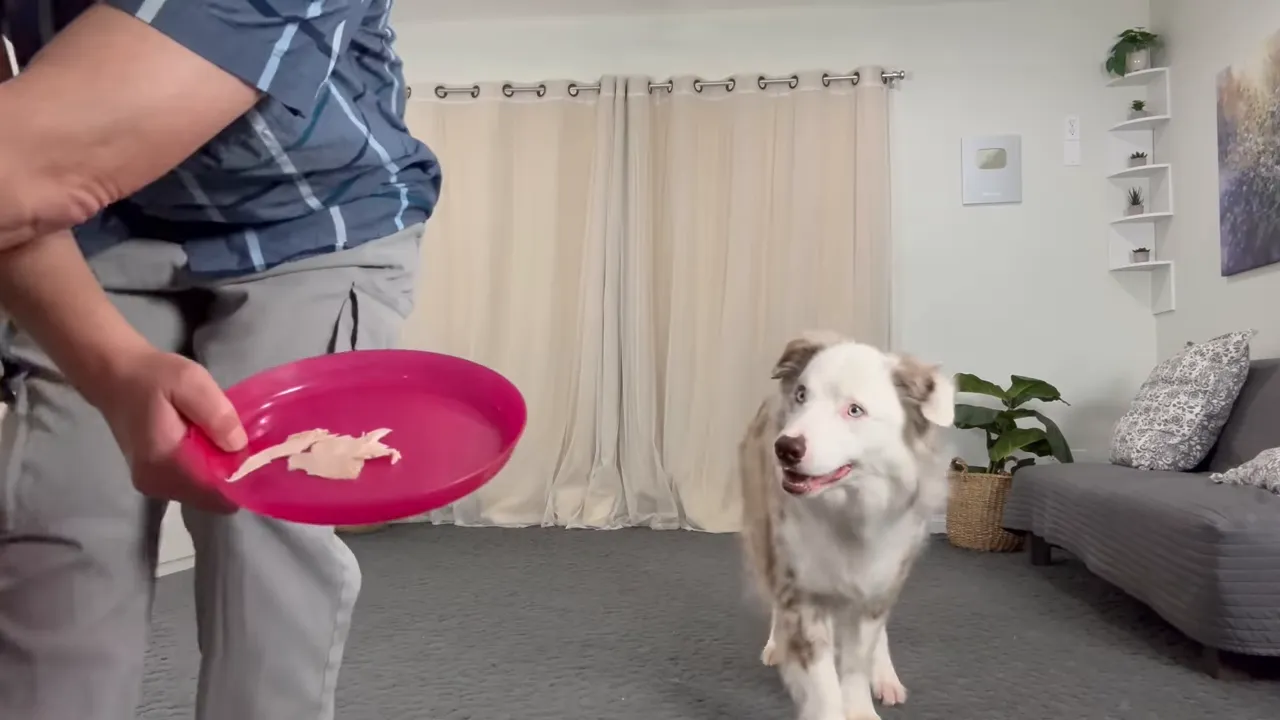
Practice the same behavior: walk past, cue “leave it” as needed, and reinforce your dog for leaving the food alone. The change is in how the distraction is presented, not in what you are asking your dog to do.
Move the Food Directly Onto the Floor
After success with the plate, you can place the distraction directly on the floor. Choose food that contrasts with the surface so your dog can clearly see where it is.
For example, kibble blends into my carpet, so I use lighter-colored meat for this stage. I do not want Bliss to walk over food he has not noticed and suddenly discover it right under his feet.
Say “leave it” as you put the food down. This helps make it clear that you are setting out a distraction, rather than giving your dog a treat to eat from the floor. Then invite your dog to move with you and reinforce them for leaving it behind.
Reward Leaving It, Not Waiting to Grab It
If your goal is for your dog to ignore food on the ground, I do not suggest finishing the exercise by cueing them to go and eat the distraction. That can encourage anticipation of eventually getting it from the floor.
Instead, mark the successful behavior and feed your dog yourself. If you want to use the distraction as the reward, you can pick it up and deliver it by hand.
The progression is simple: food inside a container, food on a plate, then visible food on the floor. Give your dog success at each stage before making access easier. For help applying this skill outside, my tutorial on leaving trash during walks covers that next challenge.


